


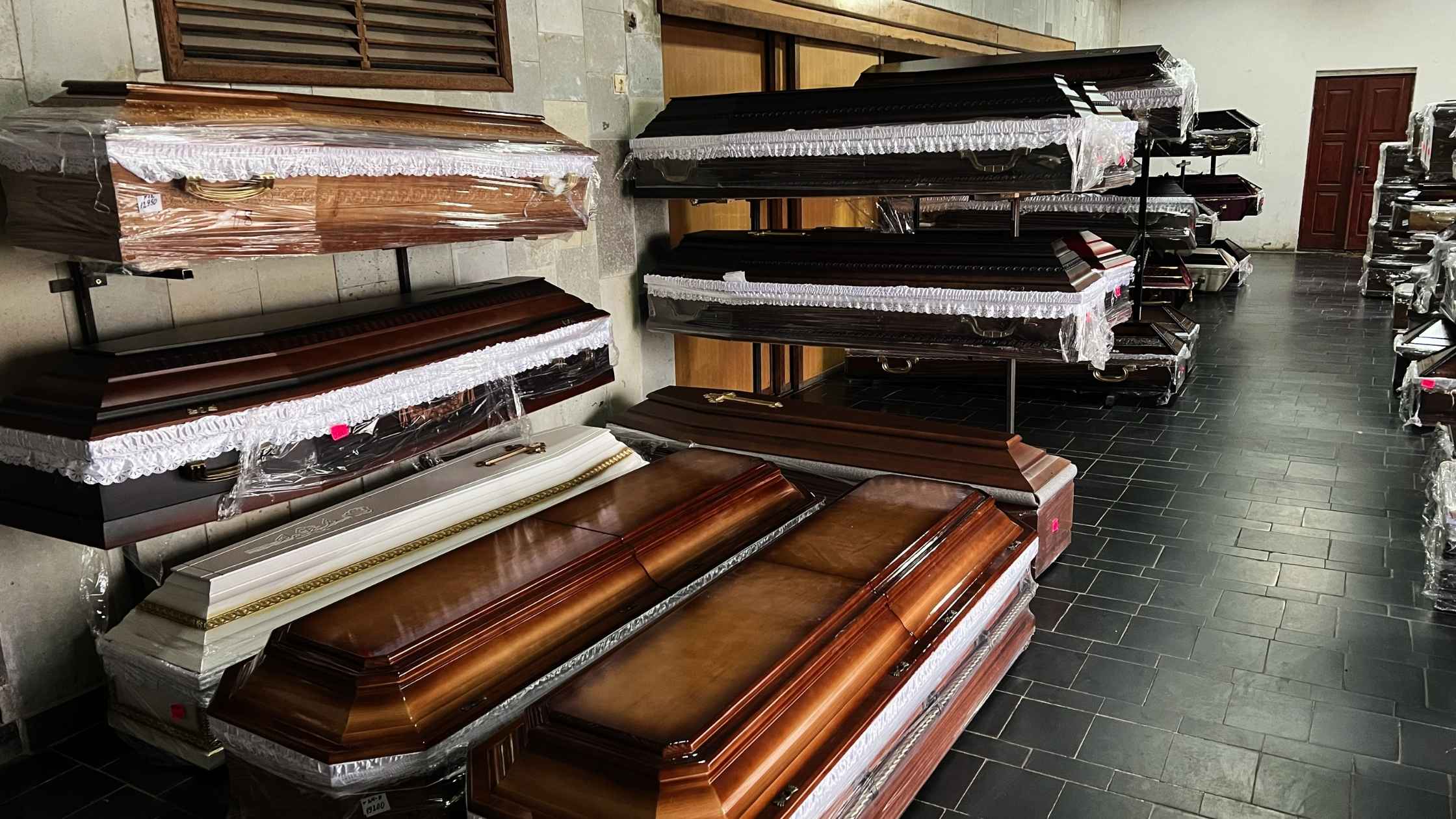
Your first visit to a funeral home is a guided planning meeting where a funeral director gathers essential information, explains burial and cremation choices, reviews service options, and helps the family complete necessary paperwork. A compassionate funeral home Des Moines families rely on should make the process clear, flexible, and manageable, especially when grief makes it difficult to focus or make decisions.
At Henderson’s Funeral and Cremation Care, families are not expected to arrive with every answer. Licensed funeral director of Henderson’s Funeral and Cremation Care, Rick Ramsey, describes the role simply: “We are in funeral service, so we are here to serve you.” The goal is to carry out the family’s wishes while giving them the information and support needed to make informed decisions.
What Happens When You First Arrive at the Funeral Home?
When you arrive, a funeral director will usually greet you, take you to a private arrangement room, and begin by asking how you and your family are doing. The first conversation should focus on your immediate needs before moving into paperwork, products, or service details.
An appointment is helpful because it allows the funeral home to reserve time and prepare for the meeting. However, families can contact the funeral home immediately after a death even when no appointment has been scheduled.
The funeral director will explain which decisions are urgent and which can wait. Transportation, authorization forms, and death registration may need prompt attention. Details such as music, flowers, readings, and obituary wording can often be discussed later.
You may bring a relative or trusted friend to listen, take notes, and help ask questions. You can also request written information to review after the meeting.
The first visit is not a test. You are allowed to ask for clarification, repeat a question, or say that you are not ready to decide.
What Information Is Needed for the Death Certificate?
The funeral director will collect personal information about the person who died so the death certificate can be prepared accurately. This usually includes the person’s legal name, date and place of birth, Social Security number, marital status, address, occupation, education, and parents’ names.
A death certificate is the official record confirming a person’s death. The funeral home typically provides the personal and demographic information, while a physician, medical examiner, or coroner completes the medical portion.
Accuracy is important because the death certificate becomes a permanent legal record. If you are uncertain about a date, name, or spelling, tell the funeral director that you need time to verify it rather than guessing.
Certified copies may be required for:
- Life insurance claims
- Bank and investment accounts
- Property transfers
- Retirement or government benefits
- Estate administration
- Other financial and legal matters
The Iowa Department of Health and Human Services explains that certified death records may be ordered from the state or from the appropriate county, depending on where the person lived or died.
Ask how many certified copies may be appropriate for your family’s circumstances.
What Funeral Decisions Will You Need to Make?
The first major decision is usually the final disposition of the person who died. Final disposition means what will ultimately happen to the remains, most commonly burial or cremation.
After that decision, the family can consider the type of gathering or service that feels appropriate. Options may include:
- A traditional funeral with the person present
- A memorial service after burial or cremation
- A graveside ceremony
- A church service
- A private family gathering
- A family-led celebration of life
- Direct cremation without a formal funeral service
Burial and cremation are not complete service plans on their own. Either can be combined with a public or private ceremony, visitation, religious observance, or personalized memorial.
The funeral director may ask whether the person left written instructions, purchased a cemetery plot, completed preplanning documents, or expressed preferences during their lifetime. Religious practices, cultural traditions, family needs, and budget should also guide the decision.
You do not need to choose an elaborate service to honor someone meaningfully. The right arrangement is one that respects the person’s wishes and gives the family an appropriate way to remember them.
What Service Details Will You Discuss?
Once the family chooses a general direction, the funeral director will help organize the individual details. These may include the date, location, officiant, music, readings, speakers, obituary, flowers, printed materials, transportation, and any meal or reception following the service.
If there will be a viewing, the funeral director may ask about the person’s appearance. Families may be asked to provide:
- Clothing
- Jewelry or meaningful personal items
- Hairstyle preferences
- Facial hair instructions
- Makeup and nail color preferences
- Eyeglasses
- A recent photograph for reference
These questions may feel very specific, but they help the funeral home present the person in a familiar and respectful way.
The obituary may also be discussed during the meeting. Helpful information can include relatives’ names, employment history, military service, education, community involvement, hobbies, accomplishments, and service details.
You do not need to write the complete obituary during the appointment. Bring notes or a draft if one is available. The funeral director can explain what information is still needed and how the obituary will be published.
Ramsey explains Henderson’s approach clearly: “However you want to arrange the funeral service, we want to be there for you.”
What Documents and Personal Items Should You Bring?
Bring any records that can verify personal information, identify prearrangements, establish military eligibility, or explain funds intended for funeral expenses. Do not delay contacting the funeral home because something is missing. The funeral director can tell you what is needed immediately and what can be provided later.
Useful items may include:
- The deceased person’s Social Security number
- Birth and family information
- Military discharge papers
- Life insurance policies
- Cemetery deeds or plot information
- Preplanning documents
- A recent photograph
- Obituary notes
- Clothing, when requested
- Contact information for relatives and clergy
- Legal documents identifying the authorized decision-maker
The Social Security Administration states that funeral homes commonly report deaths to Social Security. Providing the person’s Social Security number helps the funeral director complete that report.
For a veteran, bring the DD Form 214 or another discharge record. The U.S. Department of Veterans Affairs explains that eligible veterans may qualify for burial and memorial benefits, including a burial flag, government marker, and burial in a VA national cemetery.
How Are Funeral Prices Explained?
The funeral home should provide clear, itemized price information and explain which services are required, optional, or charged by outside providers. Families should understand what they are selecting before signing an agreement.
The Federal Trade Commission’s Funeral Rule gives consumers the right to purchase only the funeral goods and services they want. Funeral homes must provide a General Price List that families can keep when discussing arrangements in person.
Ask the funeral director to separate:
- Professional service fees
- Transportation charges
- Care and preparation of the deceased
- Facility and staff charges
- Casket or urn costs
- Cemetery or crematory charges
- Newspaper notices
- Flowers
- Clergy or musician fees
- Certified death certificate fees
- Other outside expenses
The final statement should identify the selected goods and services and show the total cost. Ask which amounts are fixed and which are estimates.
A life insurance policy may sometimes be assigned toward funeral expenses. The funeral home may contact the insurer to verify available benefits and explain the required authorization. Whether this option is available depends on the policy and insurance company.
How Long Does a Funeral Arrangement Meeting Take?
A funeral arrangement meeting commonly takes between 45 minutes and two hours. The length depends on the type of disposition, the number of service details, and whether the family has already gathered the necessary documents.
Ramsey estimates that arranging a direct cremation may take about 45 minutes to one hour. Planning a traditional funeral with a viewing, casket, flowers, service, and reception may take one to two hours.
The meeting may take longer when:
- Several family members are involved
- The family has not chosen burial or cremation
- Religious or cultural arrangements require coordination
- Important documents are unavailable
- The obituary is being written
- Family members need time to discuss their options
- Someone needs an emotional break
These time ranges are estimates, not deadlines. The purpose is to make the necessary decisions carefully, not to complete the meeting as quickly as possible.
What Happens If You Feel Emotionally Overwhelmed?
You can pause the meeting, take a break, complete only the urgent decisions, or return at another time. Grief affects concentration, memory, and decision-making differently for every person.
Ramsey says families may take a 10- or 15-minute break or return the next morning if continuing becomes too difficult. “We will do whatever is best for the family,” he explains.
The following steps can make the meeting easier:
- Bring one trusted support person.
- Write down important wishes beforehand.
- Ask which decisions must be made that day.
- Request plain-language explanations.
- Review all prices in writing.
- Take notes during the meeting.
- Divide responsibilities among family members.
- Schedule a second conversation when needed.
You do not need to hide your emotions. Crying, needing silence, forgetting information, or asking a question more than once are normal during a difficult time.
A compassionate funeral director will keep the process organized without making the family feel rushed.
Can Funeral Arrangements Be Made Online or by Phone?
Many arrangements can be started or completed by phone, video meeting, email, and secure online forms. Virtual arrangements may be helpful when family members live in different places, travel is difficult, someone has mobility concerns, or the family feels more comfortable speaking from home.
The Federal Trade Commission states that funeral providers must give accurate price information over the phone when requested. They must also provide an itemized list of the goods and services a family selects.
Henderson’s Funeral and Cremation Care can collect information remotely and conduct virtual arrangement meetings when an in-person visit is not practical. A family may also begin online or by video and visit later to see the chapel or view caskets and urns in person.
Ask how documents will be sent and signed. Confirm that you are using the funeral home’s official email address or secure system before transmitting personal information.
Relatives in different locations may also be able to join the same call, allowing the legal decision-maker to receive support from other family members.
Why Does Local, Family-Owned Care Matter?
A local, family-owned funeral home can provide direct access to the people responsible for caring for the family and making decisions. This may be especially helpful when arrangements involve unique cultural traditions, local churches, area cemeteries, unusual scheduling needs, or personalized requests.
Local ownership alone does not guarantee quality. Families should still consider experience, communication, pricing transparency, facilities, and the funeral home’s willingness to listen.
Henderson’s Funeral and Cremation Care combines local decision-making with practical knowledge of the Des Moines community. Its funeral directors can coordinate documents, services, outside providers, and family requests without sending every question to a distant corporate office.
For families seeking a funeral home Des Moines residents can contact during an immediate loss, Henderson’s Funeral and Cremation Care provides personal guidance through each decision while keeping the family’s comfort, wishes, and circumstances at the center of the process.
Watch the Full From Compassion to Conversation Episode
Watch the full From Compassion to Conversation episode on YouTube for more practical guidance from host Mike Downer and licensed funeral director Rick Ramsey. They explain what happens during a first funeral home meeting, which documents families should bring, how long arrangements may take, and how Henderson’s Funeral and Cremation Care supports people who need a break or cannot meet in person. Hear the complete conversation for Ramsey’s guidance in his own words.
Frequently Asked Questions
Do I Need an Appointment Before Visiting a Funeral Home?
An appointment is recommended because it ensures a funeral director and private meeting room are available. However, families should contact the funeral home immediately after a death, even without an appointment. The staff can explain the next steps and schedule the arrangement meeting.
Who Should Attend the Funeral Arrangement Meeting?
The person legally authorized to make funeral decisions should attend. One or two trusted relatives or friends may also help by taking notes, remembering questions, and providing emotional support. Too many competing opinions can make the meeting more difficult.
Must I Choose Burial or Cremation Before the Meeting?
No. The funeral director can explain both choices, including timelines, service options, and costs. Bring any written instructions, preplanning documents, religious requirements, or information about preferences the person expressed before death.
How Many Certified Death Certificates Should I Order?
The number depends on the person’s insurance policies, financial accounts, property, benefits, and estate matters. Ask each organization whether it requires a certified copy. The funeral director can help estimate how many may be needed.
Do I Have to Choose a Casket or Urn Immediately?
Not always. The timeline depends on the service date and type of disposition. A casket may need to be chosen quickly when a viewing or burial is approaching. An urn can sometimes be selected later. Ask which decisions are time-sensitive.
Can Family Members Attend the Meeting Virtually?
Yes. Relatives may often participate by telephone or video when they cannot attend in person. The person with legal authority should remain directly involved in approvals, authorizations, and final decisions.
Can Funeral Plans Be Changed After the Meeting?
Some details can be changed before merchandise is ordered, notices are published, or outside providers begin their work. Changes may become difficult or create additional expenses later. Contact the funeral director promptly when a revision is needed.
What Happens If the Funeral Was Preplanned?
The funeral director will review the preplanning documents, confirm what was selected or funded, and identify any decisions that remain. Dates, obituary information, participants, and current family preferences may still need to be discussed.